
Despite rapid advances in
robotics and AI across industries such as manufacturing, warehousing, and
logistics, physical tasks like transportation within industrial facilities
remain among the hardest to automate. According to a recent labor market impacts
analysis by Anthropic, actual automation adoption is still far below its
theoretical potential — especially in areas involving physical movement and
logistics. The report finds that although advanced AI systems could
assist with many tasks, real‑world adoption is currently limited, particularly
for jobs involving physical interaction rather than digital work.
In sectors requiring heavy
lifting, repetitive transport, and adaptable navigation, human labor remains
dominant. Brick manufacturing and handling — especially the internal transport
of wet bricks from the production area to drying or storage — exemplify
this challenge. Historically, even where mechanization exists, the
transportation of wet bricks has relied on significant manual effort or simple
trolleys. This is where Brick Bot by Taark Equipments comes in: an electric
vehicle (EV)‑driven, extended automation solution designed specifically to
handle wet brick transportation efficiently, sustainably, and with reduced
manpower.
Why Automation in
Transportation Tasks Has Lagged
The Anthropic report highlights a
consistent gap between what advanced technologies could automate and what they
actually do in practice. While AI systems show theoretical capability across
many tasks, the real‑world coverage remains a fraction of that potential
— largely because integrating automation into complex, physical, and variable
environments is difficult.
Transportation within facilities
— especially where conditions vary and require adaptability — remains one of
the least automated areas outside of controlled manufacturing lines. Tasks
demanding real‑time navigation, load balancing, and situational awareness pose
engineering challenges that extend beyond pure software intelligence.
Brick Bot is designed to bridge
this automation gap, bringing EV‑based extended automation to routine
transport tasks where existing solutions either fall short or require intensive
human labor.
Introducing Brick Bot: EV‑Powered
Extended Automation for Wet Brick Transport
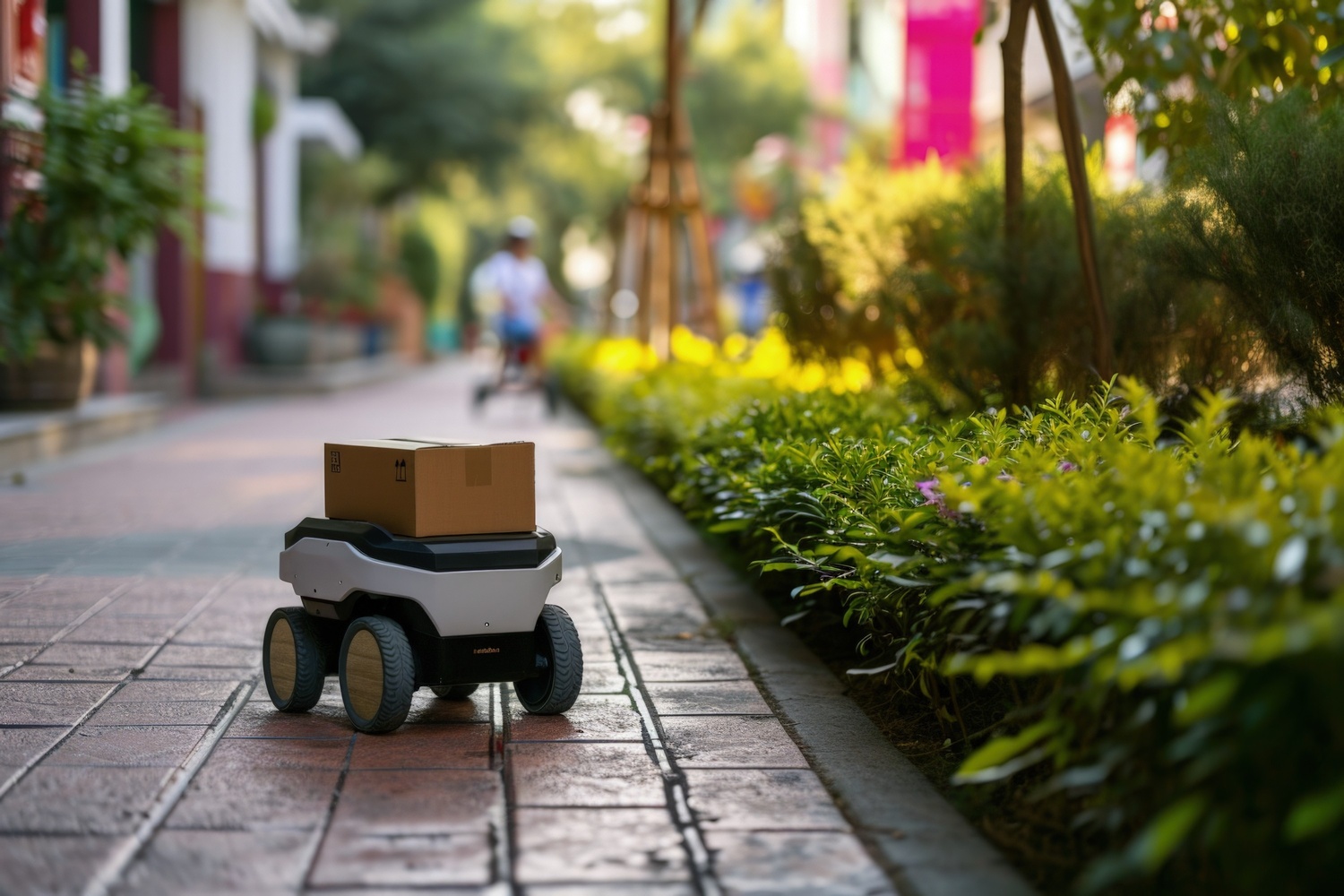
Brick Bot is an electric
vehicle platform developed by Taark Equipments to automate the transport of wet
bricks within manufacturing facilities and storage yards. It is not fully
autonomous, but instead represents extended automation — a hybrid
model where machines perform the repetitive transport tasks with minimal human
intervention, reducing reliance on large labor teams and enhancing
productivity.
What Brick Bot Does
- Automates internal transport of wet bricks
between molding and drying zones
- Reduces manpower requirements by up to four
workers in core transportation stages
- Operates on electricity, producing no
tailpipe emissions and lowering operational cost
- Works under human supervision, enabling
operators to focus on higher‑value oversight rather than physical hauling
Unlike fully autonomous robotics
that require complex environments and extensive safety systems, Brick Bot is
meant to augment existing workflows — making it practical for facilities that
cannot yet adopt full automation.
Electric Vehicle (EV)
Foundations of Brick Bot
Brick Bot’s core mobility
platform is built around an electric vehicle architecture, which brings
important advantages to industrial applications. Electric vehicles themselves
are rapidly gaining prominence due to their efficiency, environmental, and
cost benefits — and these same benefits apply to Brick Bot’s platform.
According to the E‑Amrit
electric mobility initiative by NITI Aayog, EVs offer zero tailpipe
emissions, lower running and maintenance costs, and more efficient energy
use compared with fossil fuel vehicles. While this analysis focuses on consumer
passenger and commercial EV adoption, the same principles apply to industrial
applications like Brick Bot: reduced emissions, lower lifecycle cost, and
simpler mechanical design.
Key EV benefits relevant to Brick
Bot include:
- Lower operational costs: EVs convert a much
higher proportion of electrical energy to mechanical work than combustion
engines do with fuel, reducing energy expense.
- Low maintenance requirements: Electric
motors have fewer moving parts than internal‑combustion engines, reducing
downtime and service costs.
- Environmental sustainability: Zero tailpipe
emissions contribute to cleaner internal facility environments and lower
carbon impact.
By leveraging EV technology,
Brick Bot not only enhances on‑site productivity but also aligns with broader
sustainability goals in industrial operations.
Reducing Manpower Without Full
Autonomy
Brick Bot is deliberately
engineered to be extended automation, not a standalone fully autonomous
robot. This means:
- Human supervision is required: Operators
manage tasks, load planning, and oversight rather than direct physical
execution.
- Up to four workers can be redeployed: By
handling core transport tasks, Brick Bot frees manpower for supervision,
quality checks, and additional tasks.
- Adaptability remains human‑assisted: While
Brick Bot is capable of navigating structured routes, humans handle
exceptions and nuanced task decisions.
This hybrid model acknowledges
that while automation potential is large, practical deployment in
unpredictable, semi‑structured environments is best achieved through
collaborative human‑machine systems — a theme consistent with current AI
adoption patterns where real‑world use lags theoretical capability.
How Brick Bot Enhances
Operational Performance
1. Faster and Consistent
Transport Cycles
Where traditional manual
transport can vary with worker fatigue, breaks, or scheduling, Brick Bot
maintains consistent operational cycles. This increases throughput and smooths
workflow pacing — essential for facilities with tight coordination between molding
and curing areas.
2. Precision and Reduced
Handling Damage
Manual handling of wet bricks can
lead to product deformation, chips, or breakage. Brick Bot’s structured
transport pathways and controlled handling mechanisms reduce such losses,
leading to more predictable quality outcomes.
3. Worker Safety and
Efficiency
Carrying or wheeling trays of wet
bricks is physically demanding. EV‑based movement reduces strain on workers,
lowering injury risk and creating a safer work environment. With fewer
repetitive tasks, human workers can shift to oversight and quality assurance
roles.
4. Environmental and Cost
Benefits
As an electric platform, Brick
Bot operates with lower energy cost and minimal emissions. The electric
drivetrain requires less maintenance and delivers smoother torque
characteristics suited to transport loads, which can translate to lower total
cost of ownership over time.
Taark Equipments: Practical EV
Innovation with Real‑World Impact
Taark Equipments is a
manufacturer of industrial electric vehicles and solutions, including cargo
loaders, electric three‑wheelers, and specialized transport vehicles for in‑campus
and industrial settings. (taark.in)
Brick Bot represents a focused EV innovation for brick facilities — a
strategically practical solution that extends automation to a core repetitive
task without demanding a full robotic overhaul.
This aligns with broader trends
toward electric mobility and industrial electrification, where EV platforms
serve multiple applications and enable businesses to reduce emissions and
operating costs while modernizing workflows.
Anthropic’s Report & the
Real Automation Gap
The Anthropic labor market
impacts report underscores a crucial point: real automation use remains a
fraction of what advanced systems could deliver, especially in physical
and logistical tasks. It highlights that although technological capability
exists, adoption in real settings — particularly outside purely digital or
office environments — is still limited. (Anthropic)
Transport tasks within industrial
facilities exemplify this gap. While AI and automation tools have proliferated
in controlled digital workflows, physical movement and environment‑sensitive
tasks are still primarily manual. Brick Bot responds to this gap by bringing
practical EV automation to a physical movement domain where adoption has
been slow.
Looking Forward: Toward Full
Automation
Brick Bot today is extended
automation — reducing manpower needs and improving efficiency. Yet Taark
Equipments continues R&D toward fully automated transport systems
that will build on EV platforms, advanced sensing, and autonomous navigation.
This ongoing innovation is highlighted in their LinkedIn blog updates and
reflects a roadmap toward higher autonomy.
The future of wet brick
transportation in industrial settings is electric, smart, and increasingly
automated — bridging today’s practical solutions with tomorrow’s fully
autonomous systems.
Conclusion
Brick Bot by Taark Equipments
represents a meaningful leap in applying EV‑based extended automation to
a traditionally manual task — wet brick transportation. By reducing
manpower needs, enhancing consistency, improving worker safety, and leveraging
sustainable electric mobility technology, it addresses a persistent automation
gap that broader AI and robotics research — like that from Anthropic —
shows still exists across physical work domains.
Brick Bot is not fully autonomous
yet, but it sets a practical bridge toward future advancements. As Taark
continues R&D toward full automation — and as EV technology and
electrification policies (such as those promoted through initiatives like e‑AMRIT)
gain traction — the next generation of industrial transport will be smarter,
greener, and more efficient than ever before.
Referenced
Link
[1]https://youtu.be/VMoYDdnKn3E?si=cmL0kbNqJlH63Nls
[2]https://www.anthropic.com/research/labor-market-impacts
[3]https://e-amrit.niti.gov.in/benefits-of-electric-vehicles
[4]https://insights.made-in-china.com/What-Are-the-Advantages-of-Brick-Machines-for-Modern-Construction-Needs_DTafEuOvvmiS.html
[5]https://www.iie.uk.com/news/why-you-should-plan-to-invest-in-electric-vehicles/