

The global logistics and warehousing sector is currently at
a pivotal crossroads. As supply chains become more intricate and the demand for
rapid, high-volume delivery continues to soar, businesses are facing intense
pressure to optimise their internal operations. At the same time, global and
local mandates for environmental sustainability are driving a move away from
traditional internal combustion engine (ICE) machinery. This convergence has
made industrial electric vehicles (EVs) the cornerstone of modern, smart
logistics.
For enterprises looking to maintain a competitive edge,
understanding the deep-seated benefits of industrial EVs is essential. When
seeking to modernise a fleet, it is vital to find a partner that provides
application-specific solutions that are smart, sustainable, and powerful.
Taark Electric Vehicles & Equipments Pvt. Ltd. stands out as a
leading manufacturer in this space, bringing over seven years of expertise to
the table and having already delivered over 1,537 vehicles to a diverse range
of industrial clients.
Here is an in-depth exploration of how industrial EVs are
revolutionising warehousing and logistics through cost savings, efficiency, and
customized design.
1. Drastic Reduction in Operational and Maintenance Costs
The move to electric mobility is often motivated by the
bottom line. Industrial EVs offer a significantly lower total cost of ownership
compared to diesel or petrol-powered alternatives.
- Fuel
to Electricity Savings: The cost per kilometre or hour of operation
for an electric vehicle is a fraction of that for an ICE vehicle. For
large-scale warehousing operations where loaders and cargo vehicles run
multiple shifts, these savings accumulate rapidly, providing cost-effective
operations.
- Minimal
Maintenance: Electric drivetrains have far fewer moving parts—no oil
changes, complex fuel injection systems, or exhaust components that
frequently fail in dusty warehouse environments. Feedback from real-world
usage indicates that vehicles like cargo rickshaws require minimal
maintenance, allowing businesses to focus entirely on their daily
delivery routes without the distraction of frequent repairs.
- Long-Term
Durability: Modern industrial EVs are built using durable materials
and undergo rigorous quality checks to ensure they can withstand
heavy industrial use. This focus on quality and reliability ensures that
the vehicles contribute to long-term value for the business.
2. A Healthier, Zero-Emission Indoor Environment
Warehouses are often enclosed spaces where air quality is a
paramount concern for worker safety and health.
- Eliminating
Toxic Fumes: Traditional internal combustion engines emit carbon
monoxide, nitrogen oxides, and particulate matter. Transitioning to
industrial EVs ensures zero-emission operations, which is critical
for indoor logistics. This creates a safer workspace and eliminates the
need for expensive, high-capacity industrial ventilation systems.
- Eco-Friendly
Branding: Beyond internal benefits, using eco-friendly
machinery helps businesses align with global sustainability goals and
improves their corporate reputation. The goal is to enable cleaner and
connected transportation for industries and communities.
3. The Power of Application-Specific Customization
One of the most significant advantages of partnering with a
specialized manufacturer is the ability to move beyond generic equipment. A
warehouse with narrow aisles has very different needs than a railway yard or a
massive agricultural processing site.
- In-Campus
Flexibility: For internal transport, vehicles can be highly
customized to meet unique customer-specific applications. This process
allows a business to share its requirements, receive expert advice on the
best-fit EV, and have a vehicle delivered that is tailored to its specific
workflow.
- Sector-Specific
Tools: The effectiveness of customization is seen in products like the
brick loader and hydraulic tipper, which are designed for heavy
performance and quick unloading, significantly saving time and labour.
Even specialized agricultural needs are met with innovations like the Coir
Pith Master.
- Navigating
Regulations: It is important to note that while in-campus vehicles
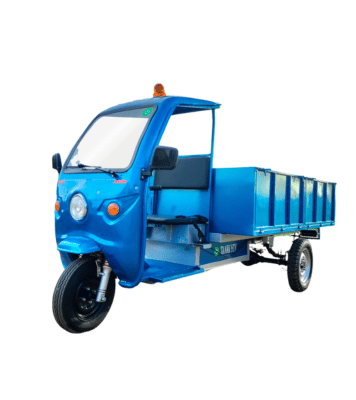
offer high customization, on-road loader models (such as the Gladia
1.0, 2.0, and 3.0) must adhere to strict registration standards and are
generally not customizable to ensure they meet regulatory safety
requirements.
4. Enhanced Workplace Safety and Silence
Noise pollution in a busy warehouse can lead to
communication errors and increased worker fatigue.
- Silent
Performance: Electric loaders are silent and efficient, which
is particularly valued in campus environments and indoor warehouses where
a focused atmosphere is required. A quieter environment allows for better
awareness of surroundings, enhancing overall safety.
- Ease
of Operation: Industrial EVs are engineered for powerful
performance that remains easy to manage. Smooth acceleration and
intuitive controls reduce the physical strain on operators, leading to
fewer errors and accidents during high-pressure logistics shifts.
- Compact
Designs: Custom EVs are often more compact than bulky
traditional machinery, allowing them to navigate tight corners and narrow
aisles without compromising on efficiency.
5. Reliability Backed by R&D and State-of-the-Art
Manufacturing
When a business invests in a fleet, they need to know it
will work every day. Reliability in this sector is built on strong technical
foundations.
- Strong
In-House R&D: The best mobility solutions are born from strong
in-house R&D and state-of-the-art manufacturing facilities. This
means the vehicles are not just electric versions of old designs, but
ground-up application-oriented EV solutions.
- Proven
Track Record: With more than 1537 vehicles delivered, the
technology has been tested across diverse industrial terrains. Experience
shows that battery life is solid, which is a critical metric for
maintaining consistent logistics operations without mid-shift downtime.
6. Comprehensive After-Sales and Service Ecosystem
A major benefit of using industrial EVs is the shift from
"do-it-yourself" maintenance to professional, nationwide support.
- Field
Service Convenience: Recognizing that heavy industrial machinery is
difficult to transport for repairs, manufacturers often provide field
service directly at the customer's location. This minimizes downtime
and ensures that the vehicle stays productive.
- Nationwide
Support: Complete after-sales support, including servicing,
maintenance, and spare parts supply, is available across the country,
ensuring that no matter where a warehouse is located, support is within
reach.
- Client-Centric
Focus: A dedicated support team builds strong relationships by
listening to business needs and providing responsive, tailored services.
This ensures that any technical challenges are met with accuracy and
attention to detail.
7. Meeting the Evolving Needs of Modern Industry
The final, overarching benefit is the alignment with the
future. As the industrial landscape moves toward smarter, cleaner, and
connected systems, the equipment used must keep pace.
- Continuous
Improvement: A commitment to quality and sustainability means a focus
on continuous improvement to ensure vehicles align with the
evolving needs of industrial and commercial enterprises.
- Supporting
Growth: By providing timely and dependable solutions, a reliable
mobility partner helps a business make informed decisions to
support its success. This collaborative approach ensures that a fleet
grows alongside the business.
Conclusion: Driving Toward a Smarter Future
The benefits of integrating industrial EVs into warehousing
and logistics are clear: they are cost-effective, zero-emission, and highly
efficient. By choosing a partner that combines years of experience with a
dedication to quality, reliability, and sustainability, businesses can
secure a fleet that is purpose-built for their unique challenges.
Whether a business requires on-road registered cargo
vehicles for urban deliveries or highly customizable in-campus loaders
for a specialized industrial facility, the move to electric is a significant
step toward a cleaner, more efficient, and more profitable future. By embracing
these innovative mobility solutions, industries can ensure their operations
remain competitive and environmentally responsible for years to come.
Related Products
[1] Gladia 1.0
[2] Pith Master